

Introduced by Devlin
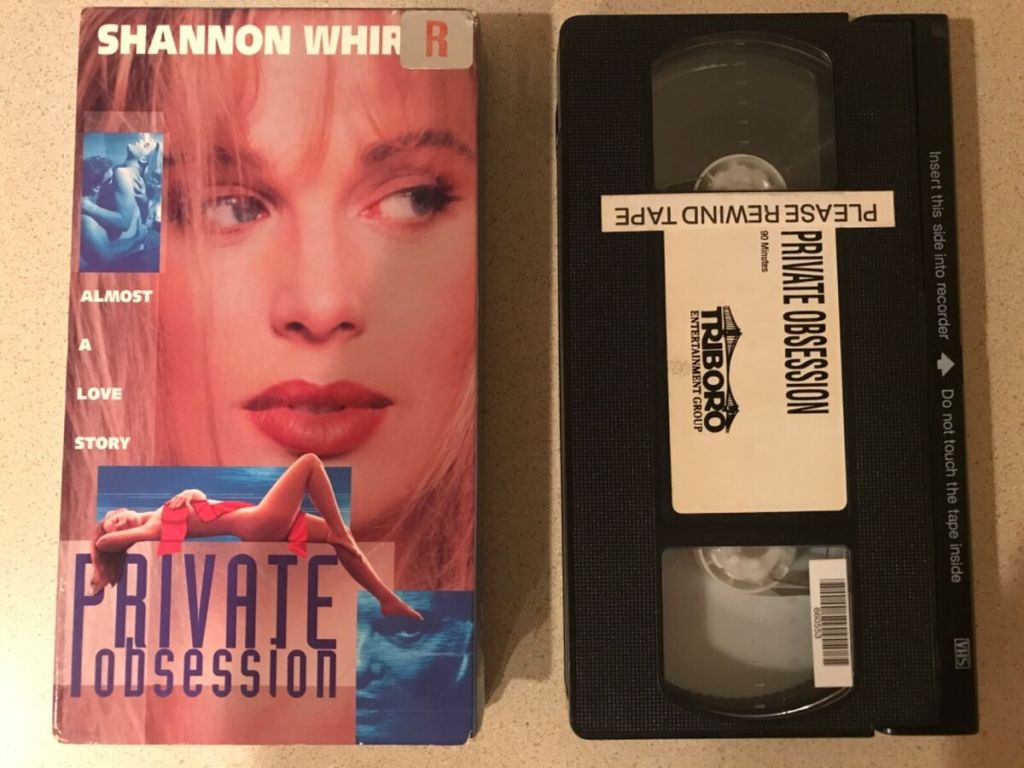
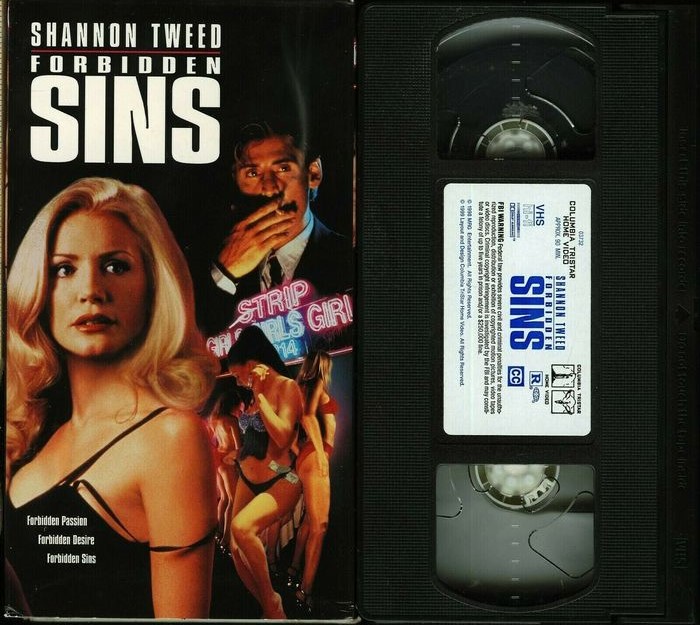
In the early- to mid-1990s, a deluge of enterprising, low-budget filmmakers sought to cash in on the erotic thriller craze that swept into cinemas in the wake of the incredible success of the likes of Fatal Attraction at the end of the preceding decade – films that we at the Rewind Movie Podcast have been lauding in our dubiously-named RErotica series. We bring the series to a (maybe temporary) close with a look at two of the biggest stars to emerge from the DTV (direct-to-video) erotica craze – Shannons Whirry and Tweed – as they star in 1992’s Animal Instincts and 1994’s Scorned AKA A Woman Scorned, respectively.
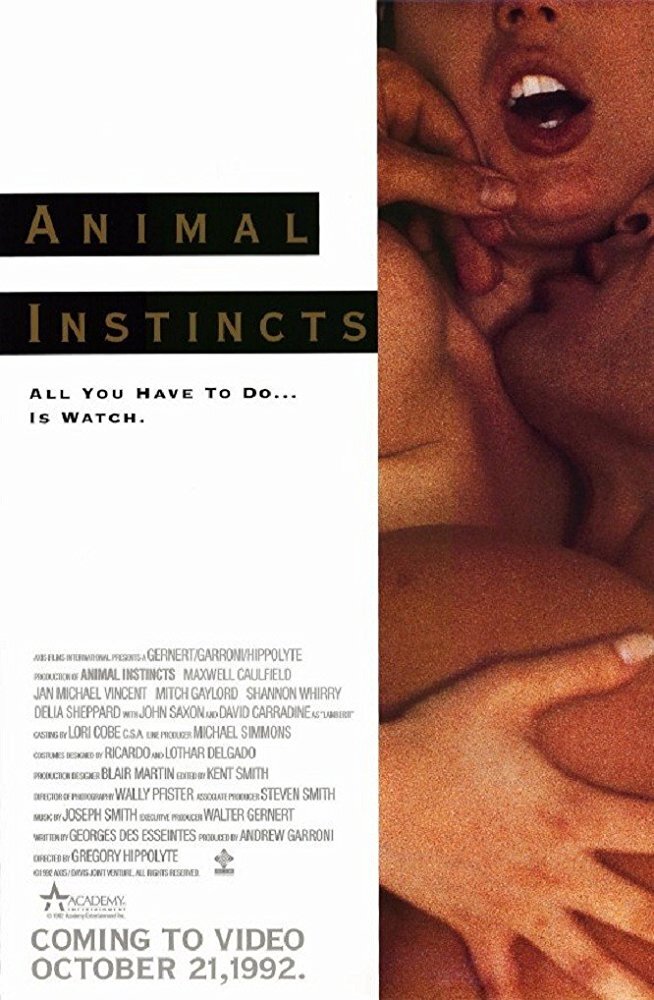
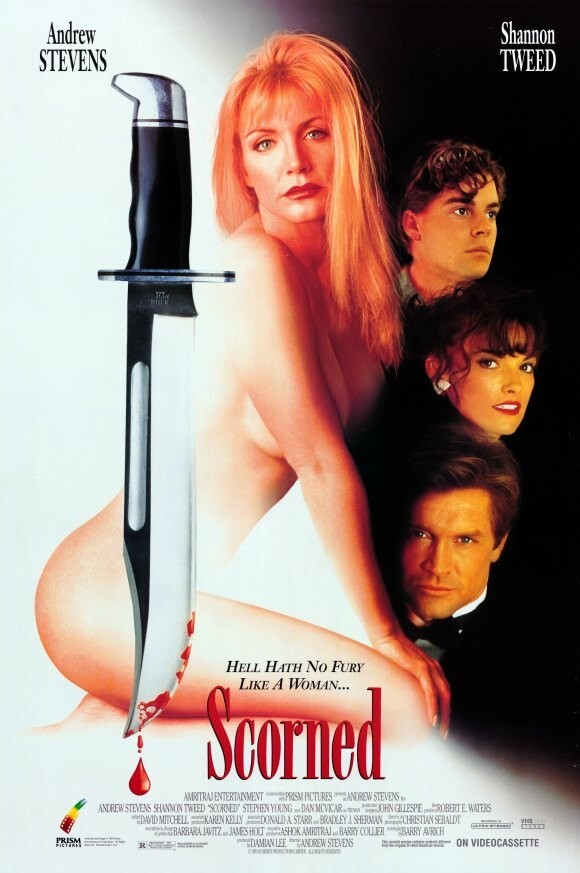
Boiling down the generic elements of their big budget forebears with ruthless, albeit questionable, efficiency, laced with the quirks of maverick creatives responding to fast turnarounds and budgets skimpier than the costumes, these staples of the video store, after-dark cable, and, for UK listeners including our panel, the nascent Channel 5 sought to match the daring sexual politics, dangerous thrills, and indulgent visual titillation of Hollywood productions on a shoestring.
While this may not be the end of the RErotica series, it serves as an ideal opportunity to pause and reflect on why we ended up taking the time out to look back on the genre’s brief, and briefly very lucrative, heyday. From our episode on Paul Verhoeven’s notorious Basic Instinct, incorporating the twisty, postmodern Wild Things, flop Bruce Willis vehicle Color of Night, and potentially including the hybrid sexy sci-fi Species, we have delved into the tropes and signifiers of films that likely left a significant impact on the memories of many a ’90s adolescent. Those tropes form the basis of Matt’s fantastic Erotic Thriller Bingo card – a must-have for all discerning cineastes:

So, why erotic thrillers? Well, recent years seem to have hosted tiresome rounds of discourse about sex in cinema – mostly ephemeral Twitter chatter of unclear provenance that purports to portray the incoming generation of young adult film-watching folk as sex-negative neo-prudes who reject any depiction of on-screen sexuality and vocally deem sex scenes distastefully superfluous. How much this is true is unclear, and even if it is, it could perhaps be a nebulous and justifiable reaction of a generation who came of age in an era completely saturated in aggressively graphic sexual content available at all times, in contrast to mine and my fellow Rewinders’ upbringing at the tail-end of the offline world, where pornography was mostly glimpsed via a Spar bag full of jazz mags tied up in the woods for reasons that we have never been able to fathom, but seems to be a bizarrely all-pervasive rite of passage here in Britain.
But if it is the case that the young adults of today are rejecting the sex scene, well, it seems a strange time to complain. The mainstream multiplexes, for much of the last couple of decades if we’re being honest, have been largely bereft of depictions even of sanitised Hollywood sex. RS Benedict’s excellent essay Everyone Is Beautiful and No One Is Horny cuts to the core of this; how modern cinema’s fetishisation of toned, meticulously crafted physiques has been uncoupled from the idea of physical lust or thoughts of sex, driven in large part by the dominant juggernaut of the Disney Marvel project setting the benchmark and blueprint for what success needed to mean in a ruthless marketplace that must cater to all possible quadrants at once and avoid anything that upsets the corporate synergy paymasters. She references the routine deployment of brief nudity or sex in films from a variety of mainstream genres in decades past – not titles segregated in some adults-only hinterland, but right there in the likes of the festive comedy Trading Places, or the seminal sci-fi actioner The Terminator. Films where you might have to process while watching these scenes among different demographic groups, including, uncomfortably, occasionally, your parents.
Is that perhaps the source of the squeamishness that seems to have slipped into this discussion? That shared, multigenerational spaces may have sometimes been temporarily infiltrated by complex, possibly embarassing situations that led to much awkward sofa-shifting and held breaths awaiting the blessed relief of a scene change? Do these brief, awkward moments in one’s formative years really leave such an irreversable mark? I’m certainly not above this feeling – from Christmas Day when I was 8 years old and my family suffered through Kevin Costner having a tipi fumble in the extended VHS cut of Dances With Wolves, up through the evening in my early 20s watching Wild at Heart with a girl at home when my dad happened to return from the pub at the exact moment a sleazy Willem Dafoe starts to lasciviously menace Laura Dern, to just a few months ago, aged 40, when I inadvertently sat down to watch Road House with my mum because she likes Patrick Swayze, inconveniently forgetting all the tits and fucking that ensue when Dalton comes to town.

Isn’t this incredibly immature and short-sighted of us, given how short our adolescence, and how long our adulthood is by comparison? Cinema is, or at least aspires to be, an art form to be taken seriously as a genuine expression of the human condition, and a commercial medium that for much of the last century or so has completely dominated the cultural zeitgeist, that seeks to be the urtext of its era, the arena and chronicler of our collective unconscious, almost. How can it afford to ignore one of the most fundamental aspects of that human condition? To excise the drama, the insights, the pleasures, pains, and, yes, excrutiating awkwardness that sex brings into our lives? Should we abandon this entire, enormous topic to some shameful pornographic corner that mostly has neither the time, nor the tools, to address the emotional or psychological landscape around their stark, near-forensic visuals, and leave mainstream cinema to pump out superpowered punchups and marauding CGI creatures like so many children left to smash our action figures together in the playroom, safe from anything that threatens to make us think or feel things that are complex and messy and ambiguous and maybe, scarily, a little illuminating?
Whether the neo-prudes are a causal or collateral factor in this, or whether they even exist at all in the numbers the internet thinkpiece slop bucket thinks they do, is not something that I feel I have time to unravel. But I look back at the films I grew up with, where so many films were willing to engage with the nebulous topic of sex and sexuality, and lament its absence today. Specifically, we’ve used this episode to go back to the late 1980s and early 1990s, when audience appetites for depictions of the sexual mores of heteronormative suburban moderates were so widely accepted, and voracious, that the mainstream literally couldn’t keep up with demand, leading a slew of sly and possibly sleazy entrepreneurs to step in and sweep up the surplus.
It is here that I hold up my hands and address the absurd gap in my portentous talk of art and the human condition and admit that we are far, far from the realms of high art. For that, we have the stark and unique takes provided by auteurs like Pier Paolo Pasolini, Nagisa Ōshima, Catherine Breillat, and Rainer Werner Fassbinder (see our discussion of his stylised seafaring seduction Querelle) who explored these ideas on the festival and indie picturehouse circuit – and even this avenue seems to have narrowed over the years. No, here we are in the category of exploitation – a term which is often misapplied, even if all too often the phrase is polysemous in its treatment of the artists, especially actresses, involved. By exploitation, I mean that these films exploit their content and concepts – in this case, the intertwining of sex and danger in soapy melodramatic scenarios with more exposed flesh than the average – and exploit the general public’s baser interests in those concepts. If Basic Instinct sees (depending on your perspective) an accomplished, intelligent director toying with these ideas with verve and complexity, wrapping questions of the audience’s complicity and lusts in with those of his characters, testing our loyalities and confronting us with our own furtive on-screen fascinations, then director Worth Keeter’s near-simultaneous video quickie Illicit Behaviour seeks only to cash in on those fascinations to adequately bilk enough money out of video rentals and international TV deals to make a tidy profit, and set the cameras rolling on the next pull of the one-armed bandit until the luck runs dry.
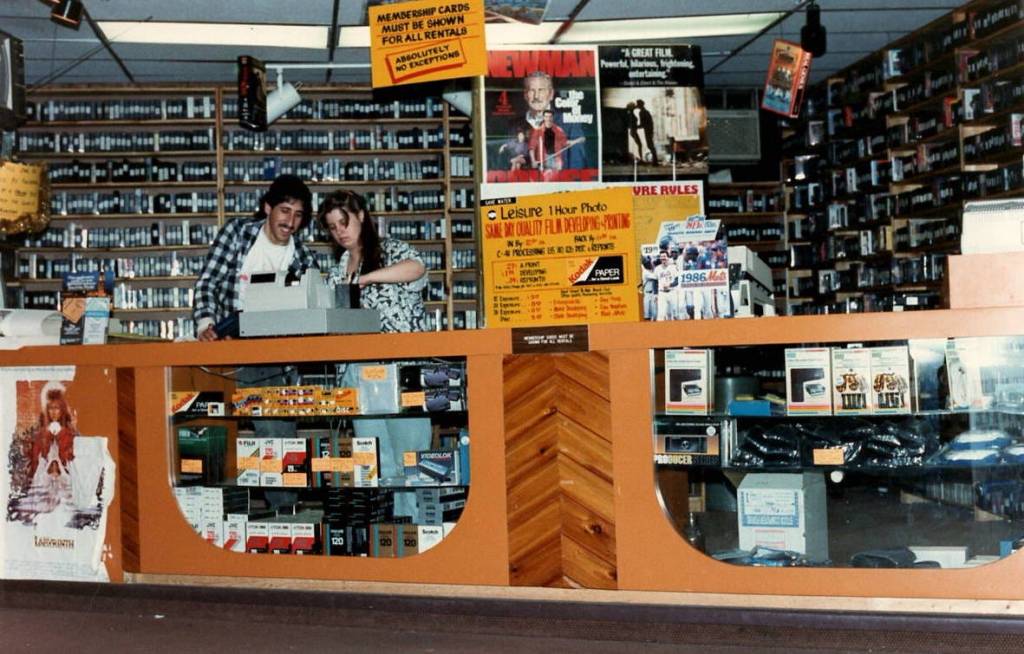
Our featured films for this episode are very much two examples of this ecosystem. During the 1980s, as the home video market exploded in popularity, the business practices of poverty row producers like Roger Corman pivoted away from attempts to slip his films into cinemas, and realised instead that an increasingly stay-at-home audience had a near-insatiable appetite for entertainment that could be watched in their own living rooms – and had not yet developed the media savvy to know when they’d been fleeced. As rental stores proliferated, lurid and ostensibly fancy box art promised intergalactic sci-fi thrills to an audience still high on Star Wars, or globetrotting Jonesian adventures with fedora-clad, squarejawed heroes, while delivering cheap facsimilies replete with threadbare sets, cut-price casts, and barebones plots shot on shoestring budgets in mere weeks when viewers finally pressed play on their coveted tapes. Disappointed renters trudged back to return them sulkily, only to likely be fleeced once more on the way out as they tried their luck again with another mysterious title tucked under their arm.
Edgier thrills could be found in the explosion of horror titles – nasty Halloween knockoffs saw hulking brutes slash their way through handsome dumb jocks and pretty high school girls with a variety of edged weapons and household appliances; zombies chewed up townsfolk; cannibals ripped, slaughtered and savaged naive travellers as audiences asked merely “how many killings?”
But markets saturate, audiences cotton on, burned one too many times by the sheer deluge of copies of copies of copies they are subjected to, and genres lose their place atop the pile. And tastes change – as the Reagan/Thatcher ’80s drew to a close, America’s cultural pendulum of restrictive evangelicalism swung away from full strength and opened the door for a version of the more inquisitive, adult-skewing film media of the 1970s. The 1990s saw sex re-enter the media more openly – in cinema, with the increased adult slant of those big budget sexy thrillers, and in the TV landscape, as softcore pioneer Zalman King unleashed his anthology series Red Shoe Diaries (led by an emerging David Duchovny, among appearances from Matt LeBlanc, Arnold Vosloo, and Ally Sheedy) on premium cable network Showtime, while HBO took to the streets with probing questions and a curious camera in the sensationalist documentary Real Sex.
Some of those filmmakers who had been earning their crust in horror and sci-fi saw which way the wind was blowing, pivoting away from space and splatter and into gauzy suburban bedrooms, strip clubs, and smoky interrogation rooms with lurid tales of frustrated housewives, infidelity, blackmail, scandal and murder. Think of Jim Wynorski, the insanely prolific auteur of over 150 films in 4 decades, trading in the cheap and cheerful robotic security guards run amok teen sci-fi slasher Chopping Mall for the saucy sex therapy thriller Sins of Desire with Playboy star and early DTV erotica lead Tanya Roberts, Penthouse Pet Delia Sheppard, and Page 3 girl Gail Thackray.


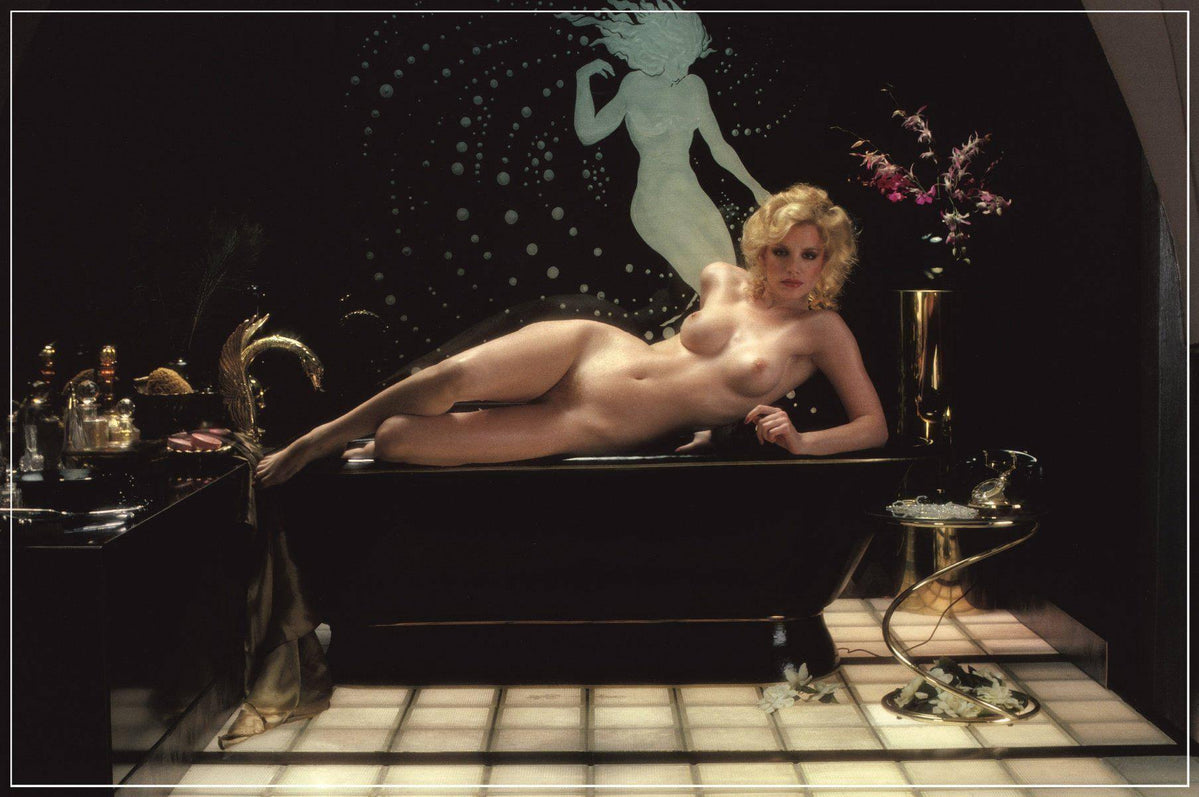



The first Shannon to enter this fray was Tweed, a Canadian fellow former Playmate (of the Year, no less, in 1982) who parlayed that notoriety into a relatively sucessful TV career with mainstream appearances on Fantasy Island, The Dukes of Hazzard, L.A. Law, and 21 Jump Street along with a decent run on classic soap opera Days of our Lives, while dabbling in the shallow end of the b-movie industry with the Empire Pictures horror pastiche Cannibal Women in the Avocado Jungle of Death alongside future smug late-night politics arsehole Bill Maher. Throughout, her profile was aided by her celebrity relationship with long-tongued glam rock huckster Gene Simmons.
Indian filmmaker Jag Mundhra, an early example of a filmmaker who pivoted away from cheapo horror like Hack-O-Lantern to the steamier side of DTV with his influential hit Night Eyes in 1990, harnessed her profile a year later in the real estate revenge pic Last Call to kick off an erotic thriller career that turned out around 15 movies in less than a decade, including 5 with her Scorned co-star and director Andrew Stevens. The only child of Stella Stevens, an early Playmate of the Year herself in 1960 who put together a prolific 50 year acting career, the younger Stevens followed a similarly hardworking path, plugging away in multiple genres in film and TV from childhood onwards until, at the age of 35 and with almost 50 credits to his name, he too was tapped by Jag Mundhra to take the lead in the aforementioned Night Eyes, the film that helped set a template for Mundhra and a whole cottage industry of copycats to try to replicate its estimated $30,000,000 haul from a less than $1,000,000 investment. Stevens himself used this work as a launchpad to an extensive producing career across multiple genres that contunies to this day. For more on this, see the excellent work of The Schlock Pit, and their extremely detailed podcast series Flesh Noir which covers the behind the scenes machinations of several of these industrious creators.
Among the many parties grasping to grab a slice of this action was ambitious NYU film school grad-turned-hardcore pornographer Gregory Dark, who, pivoted to softcore material with a staggering run of 12 erotic thrillers in 3 years. During this, he discovered a similarly scholarly lead actress in American Academy of Dramatic Arts alumnus Shannon Whirry, a Wisconsin native who had only one speaking role in Steven Seagal’s Out for Justice before taking the lead in the ripped-from-the-headlines scandal piece Animal Instincts, their first of 4 collaborations that established her as one of the premier stars of this almost hermetically sealed world, and certainly the most prominent who did not already bring with her a pre-existing profile in the world of glossy men’s magazines.

These filmmakers, and dozens more, flooded the market with films that ranged from the soapy to the sleazy, the intrepid to the intimate, the breezy to the brutal. In preparation for this episode, I spent a time with the book Sexy Thrills: Undressing the Erotic Thriller by Nina K. Martin, an associate professor of cinema who offered a different angle of approach to these titles than what I had dimly remembered from my perspective as an adolescent boy encountering these films on those Channel 5 late night viewings. While the presence of beautiful models in extended nude scenes seems ripe for male gaze titillation, it is unlikely to me that they would have persisted as long as they did, and been as profitable as they were, appealing solely to a cis-heterosexual male audience looking for an excuse to see naked women – even in the mid-1990s, there may have been an easier way, and it is unlikely that suburban couples with one sole television set would present much of an opportunity for these men to sneak something saucy home for their own illicit pleasures.
She instead makes a bold case for their appeal to the women of the era – that couples would likely rent these films together, and that the generic and story elements contained within actually have more of a lineage with traditionally/stereotypically ‘female’ genres and works. Open-ended narratives often with multiple sequels resemble soap operas and TV thrillers, as do the overwhelmingly domestic settings (tastefully appointed with a bent towards the aspirationally upper-middle-class) and focus on intergender power dynamics within romantic relationships. Perhaps inspired by steamy romance novels with lurid painted covers, transgressive stories often focus on dissatisfied housewives living out daring fantastical walks on the wild side, navigating infidelity, and even dabbles in sex work, as a vehicle for self-actualisation in ways that are unlikely to be sanctioned by more conservative big budget films that covered similar ground. Transgression usually needed to be punished in a way that resets the patricarchal order in even the steamiest Hollywood thriller, but not here, not always. The pursuit of pleasure on the part of the leading women in these roles can in fact be their liberation, at least in the case of Animal Instincts.

There is, of course, an inherent flaw in this argument: the overwhelmingly male roster of writers, directors, and producers that put these films together – most of whom, perhaps with the exception of Zalman King who always collaborated closely with his wife Patricia, but especially in the case of the notorious Dark, did not exactly flaunt flawless feminist credentials. How to read these fantasies, from whose perspective? Is this a case of generic conventions being deployed out of naked capitalistic necessity, where such a deluge of material in the market meant that only those titles that lucked their way into a recipe that struck a chord with both a male and female audience rose to the top of the heap? Were these creators more genuinely sensitive, more socially and psychologically attuned, or just more ruthlessly successful at manipulating audiences than they let on? Is that not what, in the end, exploitation cinema is all about – cunningly curating what you think the audience wants to see, and shamelessly deploying it to them? How much of the men behind the cameras’ personal peccadilloes slips into the mix?

To me at least, it’s far more interesting to scan the final film’s text to see where I believe the creators’ sympathies lie, to see what behaviours they indulge, what they choose to see punished, and what they decide to put on screen when there’s little oversight, fast cash at stake, a defined set of borrowed tropes, stories and cliches to mix and match, and no real thought given to legacy. Subsequently, what did that audience see in these disposable films, what did they make of them? What impression, if any, did they leave, and why did they flock to them in such numbers in those brief years where they reigned? Can we mine deeper meaning from the films’ deployment of their themes – voyeurism, betrayal, marital dissatisfaction, class envy and social climbing, the near-compulsory inclusion of at least one instance of soft-focus lesbianism – beyond their convenience in delivering the mandated number of sex scenes and titillation? If titillation is all that was on the agenda, then whose loins were being targetted? Making a film – no matter how naked the commercial compulsion – is an intentional act. No words in the script, nor choice of camera placement, nor edit, happens without a human hand to make the decisions. So no matter whether the filmmakers saw themselves as intentionally ‘saying’ anything, their perspective and position in culture will ensure the work attains meaning regardless.
Yet these films were intended to appear, turn a profit, and sink with nary a trace in rapid succession. It’s likely why Shannon Whirry especially hoped that these films could offer a genuine path towards Hollywood success. Shaming women for participating in a rigged game has long been a tactic deployed by a patriarchal, mysoginist society. To encourage women to undress for their gratification and then shun them as bespoiled and unfit for mainstream acceptance has derailed so many promising careers, including far bigger names than Whirry (like Sharon Stone reasonably decrying her troubles in following up Basic Instinct despite its stellar success, and her obvious talent, due to its infamy). Yet their very disposability may have presented an advantage, their ephemerality allowing them to recede into memory as they tried to seek ‘legitimate’ acting roles. Unfortunately, outside of a run as a sidekick to Stacey Keach in a TV adaptation of Mike Hammer, Private Eye in 1997, a few roles as a nameless ‘pretty woman’ in Seinfeld and Malcolm in the Middle, and being suckled by Jim Carrey in Me, Myself and Irene, Whirry did not get a chance to make a dent in legitimate movies after exiting the erotic thriller genre after a 5 year run. I think her game commitment to her collaborations with Dark show enough screen presence to suggest that this was perhaps a missed opportunity.

Tweed, around a decade Whirry’s senior and a comfortable tabloid celebrity alongside her extremely wealthy partner (now husband), seemed content to move into semi-retirement, taking self-referential guest spots in a handful of sitcoms including Frasier, and appearing with Simmons in a 6-year-long The Osbournes-inspired reality show. Tweed was a vital ‘name brand’ in the subgenre, but her servicable performances suggest she had more likely reached her ceiling as an actress.
So went most of the main players as the market ground to a halt – they either pivoted to other genres, or saw their careers peter out. Perhaps, as happened to the sci-fi and horror movies into whose territory they muscled, the genre was simply another victim of changing tastes. Maybe audiences were burned once too often by shoddy work, or burned out on the repetition of a genre cannibalising similar stories to diminishing effect. Maybe the rapid emergence of readily accessible hardcore material online hastened the demise as people uncoupled story and character from depictions of sexuality, replacing the need to engage with an entire feature film, no matter how light on plot, to satisfy more base desires. Maybe the cultural pendulum that ushered in a more permissive media environment at the dawn of the 1990s swung back towards the restrictively Christian as George W. Bush took the White House. Director Gregory Dark, tellingly, moved away from adult material and turned his talents to music videos, including clips for the likes of Britney Spears to great financial success, perhaps more than anything else exemplifying the cultural pivot from overt depictions of actual adult sexuality, towards a queasy and exploitative visual sexualisation of very young girls of the turn of the millennium pop scene under the spurious aegis of bankable, youthful innocence on the cusp of maturity.
Depictions of sexuality didn’t disappear, but the erotic thriller as a viable concern was dead. That pendulum stubbornly seems to refuse to swing back – despite the occasional efforts of filmmakers to resurrect the erotic thriller, like Adrian Lyne’s long-awaited return with Deep Water, there seems little appetite for big time productions of the thorny intertwining of sexuality and deception starring proper real movie stars. And, of course, that goes double for the barnacles on the hull – enterprising, possibly unscrupulous filmmakers looking to grab a slice of the market with off-brand knock-offs that can bear a weird charm all of their own, if looked at from the right angle.
It’s also a shame that these films have been allowed to slip into an obscurity that, in this era of 2K and 4K restorations of so many different stripes of disreputable exploitation, seems like a monumental oversight. How this vast tranche of a most American type of pop culture detritus, laced with intrigue, scandal, soapy melodramatics and complicated negligees has disappeared all but without a trace magnifies the disappointment that, say, comes with Whirry’s inability to launch a legitimate career – her ouvre of enjoyable, committed performances confined to grainy illegal streams, or simply lost altogether. See 2023’s remarkable, exhaustive documentary We Kill For Love for more on this.
The ecosystem that supported both the big-time and the small-time versions of these films may well be gone for good, or is at least marginalised to the point where any example that emerges is a novelty. What I’d give to see a re-emergence of an avenue where audiences can choose from a world of pluralistic explorations from all perspectives of the influence of sexuality on human behaviour. My love of the baffling paradox that is Russ Meyer is clear. Ditto for the mad Italian forza della natura Tinto Brass, and several of the filmmakers of the vast Japanese pinku subgenre. But their films, as forthright and unabashed as they are, come from an unapologetic place of male heteronormativity. Can we not hope for films from all parts of the spectrum of gender and sexuality, that do not have to concern themselves with such boring hinderances as good taste or respectable representation? To swerve away from the chin-stroking arthouse and steer films down the bumpy road of lurid exploitation? How better to try to really learn about each other, and how we see the world, than through nocturnal, unfiltered thoughts, smuggled onto our screens via overheated, stolen story tropes in snappy, 90 minute thrillers deployed with ruthless, gleeful shamelessness?
Listen on Spotify
Listen on iTunes
Listen on Google Podcasts
Listen on Breaker
Listen on RadioPublic
Listen on CastBox
Listen on Stitcher
Listen on Overcast
 The Rewind Movie Podcast
Leave a comment